Introduction
When it comes to the topic of investing, one cannot avoid the concept of “value.” The term “value” is often used casually, but what exactly lies behind it? Everyone seems to already have a fixed opinion and a single valid definition, which, however, often differ greatly and sometimes contradict each other. What remains is often confusion, filled with vague half-truths.
However, if one wants to invest their wealth in something, it is advisable to reconsider and understand the concept of value on one’s own, taking personal responsibility.
Therefore, hopefully, this article will be valuable to you!
The term
The term “value” or “valuable” is often used in very different contexts and fields: “The painting is valuable,” “Gold is valuable,” or to quote Alexander von Humboldt: “In essence, it is the connections with people that give life its value.”

This is not intended to be a strict definition of the concept, of which there are certainly many, be it economic, linguistic, psychological, or philosophical. Even within these domains, it often happens alarmingly often that one gets entangled in philosophical thought loops and linguistic pitfalls. Attempting to define a concept absolutely and with mathematical precision is bound to fail since it would require resorting to further definitions within that very definition, which would then also need to be defined with the same meticulousness. If one were to make the effort to define all concepts, they would end up in a well-known territory: mathematics. Let us therefore temporarily abandon the (compulsive) notion of being able to comprehensively and absolutely establish a concept as a formula.
The following will focus on building a practical understanding. The aim here is not primarily to exhaustively cover all facets of the concept but rather to comprehend the phenomenon of why and when we attribute value to something.
Value and price
Whether a painting, gold, human relationships, or a specific emotion is more valuable to someone is individually different. In simple terms, value simply means how important something is to someone, what “values” they hold. Value arises when a subject assigns different priorities to things in relation to a specific goal, resulting in a measure of usefulness (literally a “valuation”).
The relevance and urgency of using the multifaceted term “value” increase with the intelligence of the subjects since the means to the goal also multiply with intelligence. Humans have the ability to abstract things in their thoughts, which theoretically allows the concept of value to be transferred and manipulated through space and time. It is through these abilities and possibilities that the concept of value emerged in order to express it within communication.
Now the question arises: What urgency and priority does this valuable goal have? How high is the willingness to sacrifice, the proverbial “price” one is willing to pay?
In an existing monetary system, this is often expressed in units of money, as they are a means to express one’s willingness to sacrifice in a competition.
Of course, besides the monetary method, there are also other ways of expending energy, such as physical assertion (violence). Which method is more purposeful depends on the system in which this negotiation takes place. The same behavior of prioritizing and exerting energy for a goal can be found in other acting subjects, such as animals. However, in their case, the struggle for value is not conducted with bills and coins but with the aforementioned physical energy.

Price does not mean value but is a result of the competition through supply and demand. In addition to money, physical violence can also be used as a criterion for enforcement.
The price of a commodity is the quantitative property of change by which the realization of the purchase contract is decided. It is thus a quantity of a realized transaction. This can be a specific monetary amount in euros, a barter of goods, or the number of flying fists: everything is a negotiation. For it to be realized, both parties must agree on the price. Whether a price is “good,” “bad,” “justified,” “favorable,” “expensive,” or even “fraudulent” is a purely subjective interpretation that can be made before, during, or long after the purchasing process and can indeed change over time. Price is merely a quantitatively expressed agreement, a compromise on the path to achieving one’s goal and thus obtaining value.
In this process, when multiple competing subjects are involved, the literal “price” one is willing to pay to achieve their goal increases. If one is the only interested party in something, they don’t have to pay anything. Therefore, price does not reflect value but rather the competitive situation surrounding a value. Air is infinitely valuable but free because everyone has enough of it, whereas a bottle of water in the desert can quickly assume astronomical prices if there are competing interested parties.
If there is a seller, the seller becomes the competitor, and price determination occurs between the seller and the buyer. It is important to understand that when one stands alone at the bakery, the other (potential) buyers are not competitors, but they would certainly rush in if the prices were very low. The actual competitor is, therefore, the seller who does not give out the goods at too low prices because they speculate on potential competition from the buyers’ side. If two or more parties vie for something, a price exists as a means of reaching an agreement.
This brings us to the classical idea of price determination: supply and demand. This leads to competitive pressure, which in turn leads to an agreement with a specific price.
Value and price are fundamentally different phenomena, and it cannot be causally inferred from one to the other.
However, if value can only be subjectively understood from the perspective of personal intention, what then is the intrinsic value that is often discussed?
The Myth of Intrinsic Value
Although the intuitive understanding of value exists, many people equate the term with material value. Intuitively, this is associated with the value that exists without any “involvement,” in the absence of an intelligent subject and other additional means. This is often perceived as intrinsic value.
The assumptions underlying such an understanding of intrinsic value can be quickly elucidated based on the previous considerations:
The first factor is the independence of intrinsic value from a subject, more precisely, from the intelligence of the evaluator, while the second factor is the uniformity of value assessment. The value should not depend on the subject nor fluctuate due to individual assessments.
Considering these two factors, it quickly becomes clear that the “intrinsic value” itself does not exist.
Firstly, in the absence of an evaluator, there is also no purpose and thus no value. Secondly, due to the different goals of subjects, different criteria for evaluation are always used.
So, what could the concept of intrinsic value still mean? The important question is: if something doesn’t exist, what does the linguistic use intend to achieve? What has led to the birth and existence of this concept?
Probably the fact that an object carries a certain amount of “energy” as a result of work performed and/or has low entropy. Although this leads to a higher energy by definition, it has no effect on value. Under many circumstances, the value may increase due to the work performed, but the relationship is far from causal.
More work does not automatically result in a higher value.
The hard work in a gold mine is not the reason for the value of gold, but rather the value of gold leads to increased work in order to obtain more already valuable gold. Similarly, a car that has required a lot of energy in its development is more valuable, but only if it has been done in a purposeful manner. The seller’s attempt to increase the price of a used car due to a high mileage (representing a lot of work done) will usually not be well-received.
Another argument that seems to reinforce the existence of intrinsic value is the aspect of longevity and stability, as an object can be used for hundreds of years and survive world wars. Again, the longevity of an object can indeed increase its value in many cases, but it by no means guarantees a higher value causally. It is simply another property among many that may be important for a particular goal. Stable buildings, metals, well-preserved writings, or preserved vegetables are some examples, while sand, waste, or nuclear waste do not gain value through stubborn existence. The property of long-term stability should not be confused with intrinsic value.

It must not be forgotten that people often attribute value to objects. For example, young children or even many adults sometimes believe that coins themselves, independent of their function, are valuable and abstract the entire value onto the object of the coin, instead of understanding that the physical form is merely a means and part of the monetary function as a medium of exchange. The same applies to works of art, relics, animals, humans, etc. These things or individuals do indeed become valuable, but here too it applies: only in the presence of this evaluator, even if they deny this dependence. When this evaluator is absent, there is no longer anyone who denies this dependence and can project value onto it. No matter how convinced a subject may be that the value is not generated intrinsically by themselves, but only by the object, in the absence of the subject, their projection also disappears. This does not mean that the value of something cannot increase because when many believe in the intrinsic value of an object, the value can actually increase. However, it still remains not truly intrinsic.
We can therefore conclude that intrinsic value, in this form, does not exist.
However, there is a reason why this construct exists in language. Unfortunately, it confuses a mere attribute of value with value itself. What could be the cause of this confusion? Presumably, people attribute intrinsic value to something because they are simply unaware of the reasons for this value attribution. As a result, only the overall judgment of “valuable” is consciously grasped and carelessly projected onto the object.
The focus is not on the things themselves, but on what one, as a subject with a goal, does with these objects. This can be illustrated through vivid examples.
Example: Air – Enough is enough
Air is valuable. How valuable? For people who want to live, very valuable: only in the presence of air (oxygen) can this be achieved. There are individuals with suicidal intent who obstruct the airflow. In that moment, air is anything but valuable in their subjective assessment.
What exactly is valuable about air for those who desire to live? It is abundantly available, and one could destroy a square meter of air in their own home without hesitation. Upon closer examination of the situation, we see that each square meter of air in itself is not valuable, but having enough air is, regardless of which oxygen molecules one breathes. While one can do without a few oxygen molecules under normal circumstances, they become extremely valuable underwater or in outer space, as the molecules in this bottle are “the only air” for sufficient breathing and thus the means for survival. If one were to die of thirst before suffocating, they would assign more value to a bottle of water than to a bottle of oxygen. The scarcity that changes the situation and therefore the value does occur frequently, but it is not a causal factor for value.
Example: Key – The Goal Dependency of Value
What is the value of a key? It is not the material of the key or the work that went into its production, but its specifically designed function. Of course, we should not overlook the fact that the material, durability, and quality also play a role, but only in relation to the main goal. The material itself is not valuable, but rather the function. Naturally, there could also be valuable designer and branded keys. However, in these cases, one must recognize that the value did not arise due to the function as a key, but rather as a status symbol. The key to St. Peter even holds deep religious significance, and unlocking a physically existing door is completely irrelevant to the attributed value.

Example: Gold – Where Does the Value Lie?
The same applies to gold. Why is gold valuable? Its usefulness as a practical material reflects only a very small portion of its actual value. We have seen that value arises only from the subject-object relationship. Who finds gold valuable? Those who understand that gold is associated with a high price. Gold is valuable because it can be exchanged for a significant amount of money. But why is it expensive, how did it all start?
The high price of gold is attributed to its scarcity. One might answer in this way. Let’s compare it to grains of sand or specks of dust. There are indeed many, many of them, but theoretically, they are not infinite. “Scarcity” is once again a subjective evaluation: at what point does something become “scarce”? Perceived scarcity can only arise when there is demand. And this demand must not arise from scarcity, otherwise, we would be going in circles. So, there must certainly be other factors that generate demand and lead to a perceived scarcity.
An important factor is high fungibility: the simple correspondence between an object and its (conceptual) abstraction. The term “sand,” for example, is not clearly defined. At what size does a grain of sand cease to be sand and become a stone? Which materials qualify as grains of sand? Who defines it? And who determines who defines it? A nearly subject-independent clarity of assignment from an abstraction to an object (e.g., in the case of gold, through qualitative evidence and quantitative measurement) allows for a clear association. Due to this alignment with the definition on the abstraction level, individual physical representatives of this object are completely interchangeable. In addition, there are other essential factors such as the aforementioned durability, mobility, divisibility, comprehensibility, scarcity, and protection against manipulation. The commonly used term “store of value” actually describes the ability of an object to be perceived as valuable over a long period due to its special characteristics. Since there is no intrinsic value, there is also never a perfect store of value.
But how can gold be perceived as so valuable, even though most people do not understand or verify the aforementioned points such as fungibility and divisibility? This is where we come to the mass psychological effect.
Mass Psychological Effect and Bubbles
An underestimated factor is undoubtedly the consideration of value based on socio-psychological phenomena. As previously described regarding bread at the bakery or “intrinsic value,” the projection of value can play a significant role. This occurs when individuals know precisely how others perceive the value of something.
It is important to note that this psychological effect is no more or less real than other properties that contribute to value formation.
Belief itself is real, not necessarily the content of the belief, but the belief itself.
And the more real or irrefutable the content of the belief, the more certain the existence of that belief. It is by no means trivial to attract high attention and trust. Therefore, what matters when considering longer periods of time is how much others and external circumstances support or undermine that belief. Even small revelations can cause mountains of belief to crumble (e.g., “Tulip Mania”). Conversely, beliefs that have never been refuted are stable and almost imperceptible. This includes not only the belief that other people find money and gold valuable but also the belief that bread satisfies hunger. This belief can be self-proven on a daily basis. If one day bread no longer satiates or tastes good, we would no longer trust the belief statement “I buy bread to satisfy my hunger,” and the product would soon disappear from the market, labeled as “bread mania” in newspapers. Therefore, all value attributions involve psychological beliefs; only the degree of mass psychology differs.
When it comes to things that derive their value mainly from mass psychological effects, one might often think: “You just need to find the next fool who is willing to pay a higher price for this seemingly worthless thing.” But what if that next fool sells the item for an even higher price? Then the next fool turns out to be the clever one.
In fact, things are valuable precisely because they have no other use except for the persistent, continuous mass psychological effect.
The value of building materials, for example, depends on their properties in construction. If a better material is found, the previously valuable building material is forgotten. If gold’s value were solely derived from dental crowns, it would constantly be at risk of being displaced. By externalizing the value into the mass psychological effect, it is protected from that.
Of course, the mass psychological effect also carries risks because it can quickly spiral out of control. The attributed value of something can persist not only due to the mass psychological effect but also due to the time component of price increase. If a person believes that something will fetch a higher price in the future than in the present, that thing becomes desirable and valuable for the goal of making money. This increase in value then leads to increased demand. As a result, the price keeps rising until no buyer can be found and the belief in a higher future price starts to crack. Since that belief was valuable for that thing, the price can quickly plummet in a downward spiral once again.
Money and Bitcoin
Money in the form of fiat currencies also functions based on the mass psychological belief, but it usually stands on a stable foundation: protection and maintenance by institutions.
Of course, it doesn’t matter whether something exists in the tangible physical world or digitally. Because money has long ceased to exist solely in the form of coins and banknotes. Control and protection by financial institutions are also provided for digital numbers, ensuring the same value.
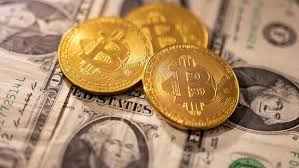
The Bitcoin network is also digital, exclusively so. Behind this decentralized technology, there is no central protective or controlling authority. And here lies an important aspect for evaluating Bitcoin: How valuable is a system that operates without a central power, which can be seen as either protective or manipulative depending on one’s perspective? This, in turn, depends on many other factors, such as the behavior of this authority, economic, cultural, and political trends, as well as the existence of alternative decentralized systems. In assessing the value of Bitcoin, it should be noted that it possesses many properties similar to gold (fungibility, robustness, mobility, divisibility, comprehensibility, scarcity, security against manipulation) and even surpasses them in most criteria.
Therefore, it is absolutely essential for investment decisions to verify where one sees the value, where others see the value, and how the characteristics that constitute these values will behave in relation to the real conditions both now and in the future.
TLDR: The concept of “value” is complex and subjective, varying from person to person and depending on individual goals and priorities. Value arises from the relationship between a subject and an object, reflecting the importance and usefulness assigned by the subject. An intrinsic value of an object does therefore not exist. Price, on the other hand, is a result of competition and negotiation in a market, representing the willingness to sacrifice to achieve a goal.